At SJ Dynamics, we design and install solar power systems that reduce electricity costs, provide independence from load shedding, and deliver clean, renewable energy for homes and businesses. All solar systems work on the same principle: solar panels convert sunlight into DC power through the photovoltaic (PV) effect. This DC power can be stored in batteries or converted by a solar inverter into AC power to run appliances. Depending on the system, excess energy can be fed into the grid or stored for later use.
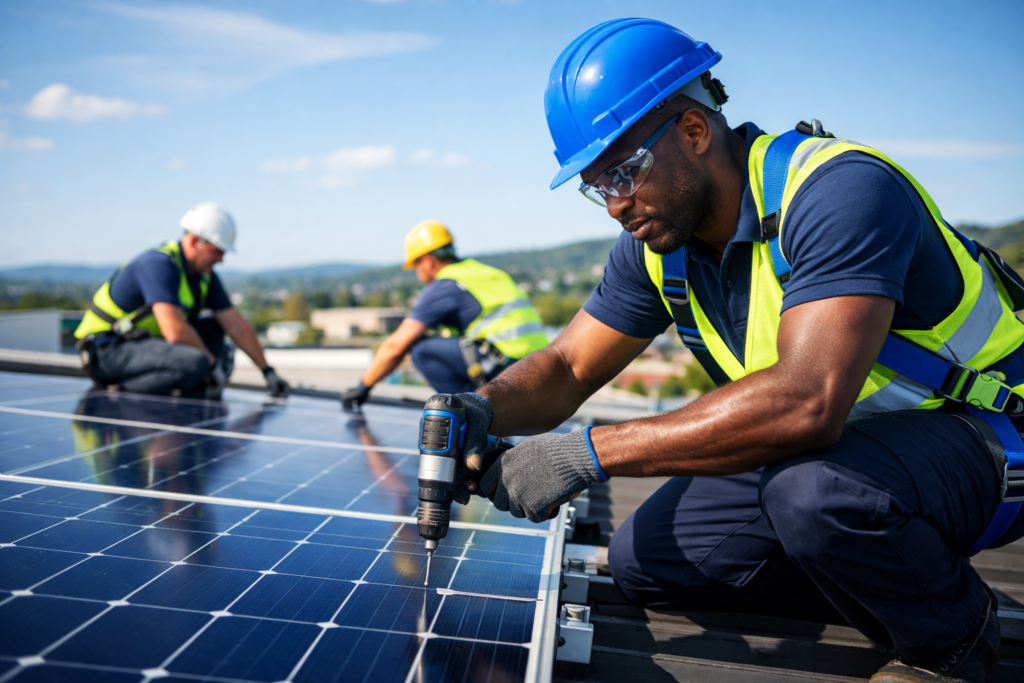
1) On‑Grid (Grid‑Tied or Grid Feed Systems)
On‑grid solar systems are the most common choice for businesses and households. They substitute utility power with “free” solar power and connect to the public electricity grid. Excess energy can be exported for credits or feed‑in tariffs (FiT). ⚠️ For safety reasons, on‑grid systems shut down during blackouts or load shedding, so while they reduce your monthly bill, they don’t provide backup power during outages.
2) Off‑Grid (Stand‑Alone Power Systems / SAPS)
Off‑grid systems operate independently of the utility grid. Designed with sufficient panels and battery capacity, they can supply all the power a property needs year‑round. Traditionally used in remote areas, off‑grid systems are now popular in cities thanks to falling battery costs and advanced inverters. Modern off‑grid inverters can accept three power sources: solar as primary, batteries as secondary, and the grid as tertiary backup. This flexibility allows off‑grid systems to function like hybrids when configured accordingly.
3) Hybrid Systems
Hybrid systems combine solar and battery storage with grid backup. They allow you to store solar energy generated during the day and use it at night. When stored energy is depleted, the grid provides backup. This gives consumers the best of both worlds — lower bills, reliable backup, and energy independence.
Why Choose SJ Dynamics?
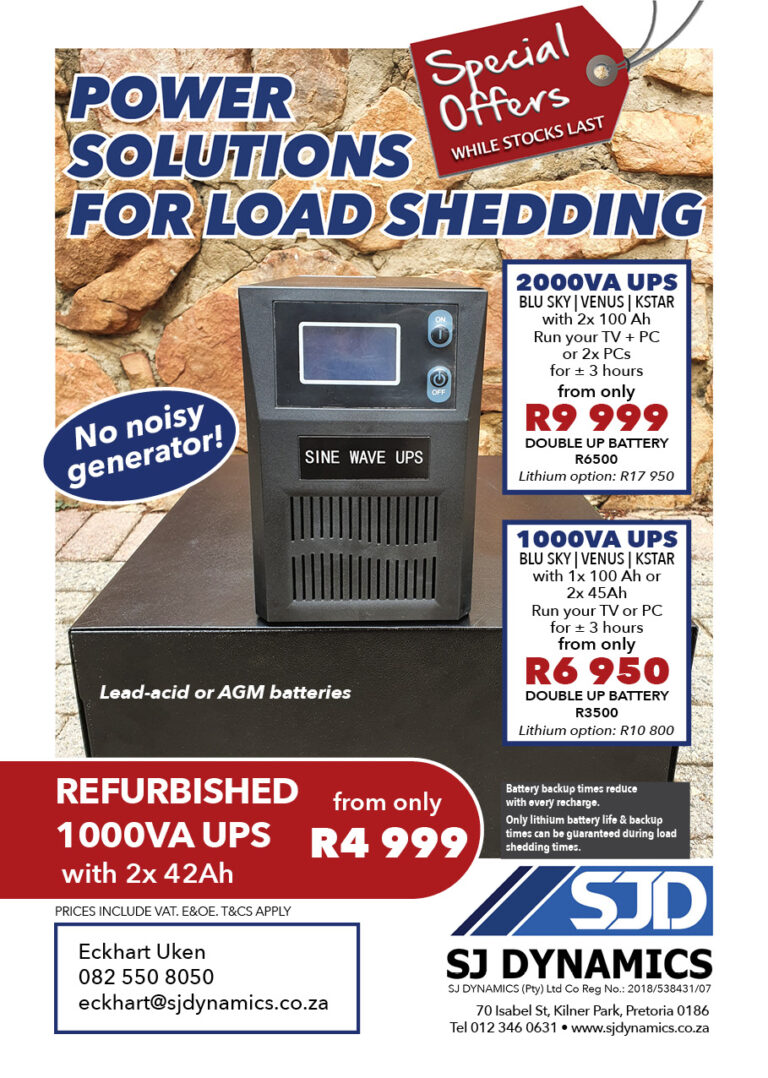
- Expertise in solar solutions, UPS systems, generators, and batteries
- Level 2 BBBEE company registered with the National Treasury CSD
- Trusted by corporates, parastatals, and government departments across South Africa
Is solar still worth it if there is no load shedding?
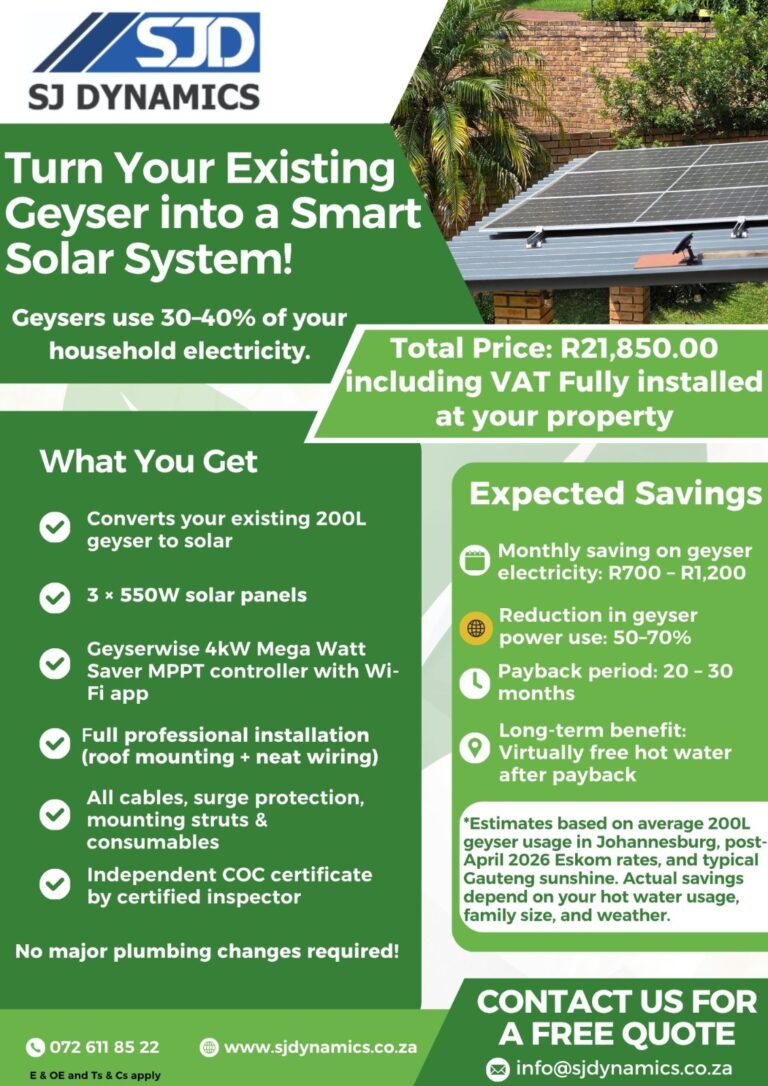
Yes. Electricity tariffs continue to rise, so a properly sized hybrid system typically pays for itself through lower monthly bills (often 60–90% reduction) while also giving you backup during unplanned outages and protection from surges. Adding the solar geyser conversion improves the payback even further. The system also keeps you ready if national load shedding returns in future. We design systems for today’s cost and reliability needs.
What is the difference between on-grid, off-grid and hybrid solar systems?
On-grid systems lower your electricity bill by feeding excess power into the grid, but they shut down during any power cut (for safety). Off-grid systems run completely independently with batteries. Hybrid systems give you the best of both: they reduce your monthly costs, store solar power for night-time use and outages, and still have the grid as backup. Hybrid is the most popular choice right now because it addresses rising tariffs, local outages, voltage surges and the risk of load shedding returning.
How big a solar system do I need for my house now that load shedding has stopped?
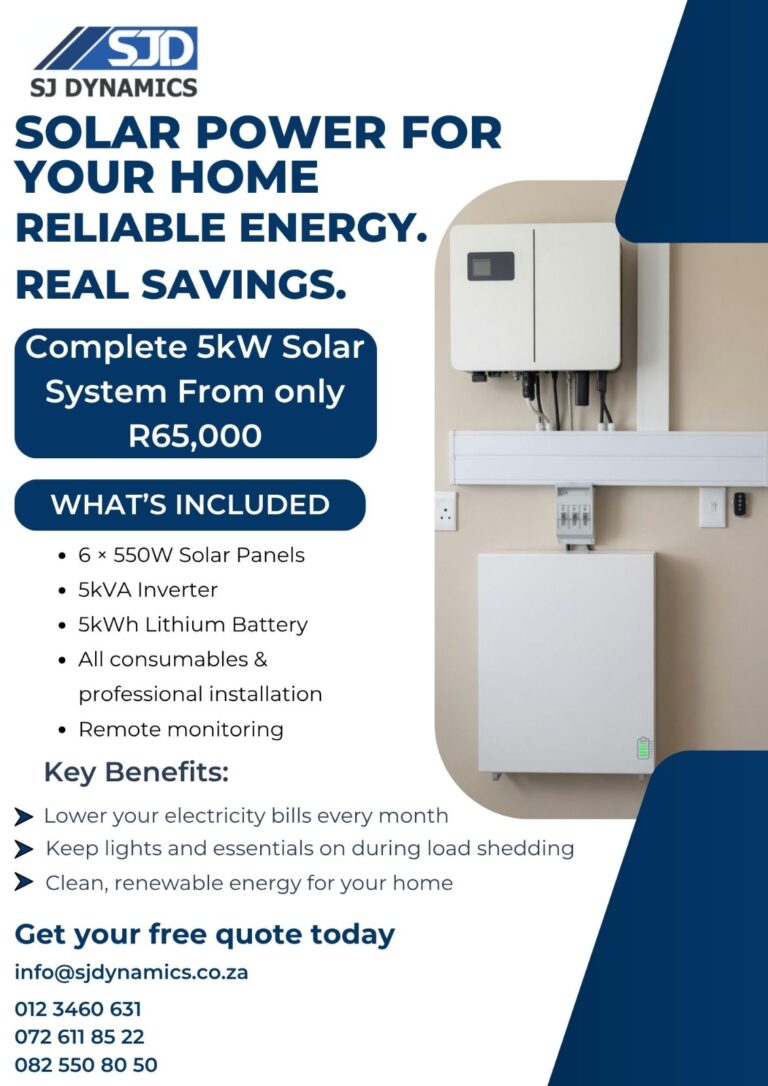
It still depends on what you want to keep running during outages and how much you want to save on your bill. For lights, plugs, fridge, TV and Wi-Fi (everything except the stove/oven and geyser), a 5kVA hybrid system is usually ideal — this is the size we are currently promoting, especially when combined with converting your existing geyser to solar. For the entire house including higher loads, most homes need an 8–10kVA system with more battery storage. We do a free assessment so the system matches your usage, protects against surges and outages, and remains useful if load shedding returns.
FAQs
Need Help?
Common questions answered